AQ Test Insights: Understanding Neurodivergent Relationships & Communication
Do you ever feel like you're operating on a different wavelength in your relationships? Perhaps you find small talk exhausting, prefer deep conversations about specific topics, or miss social cues that others seem to catch effortlessly. If this sounds familiar, you're alone. Understanding your unique neurotype can be the key to unlocking more fulfilling connections.
For many adults, exploring their autistic traits is a journey of self-discovery that transforms how they see themselves and their relationships. A valuable first step in this journey can be understanding where you fall on the Autism Spectrum Quotient (AQ) scale. This is not about labels, but about gaining clarity on your personal communication style, social preferences, and sensory needs.
This guide explores how insights from an AQ test can illuminate your relationship dynamics. We will cover practical strategies for communication, managing social energy, and leveraging your unique strengths to build stronger bonds. With these insights, you can transform relationship challenges into moments of connection and growth. To begin this journey, you can begin your free AQ test with a free, confidential online assessment.
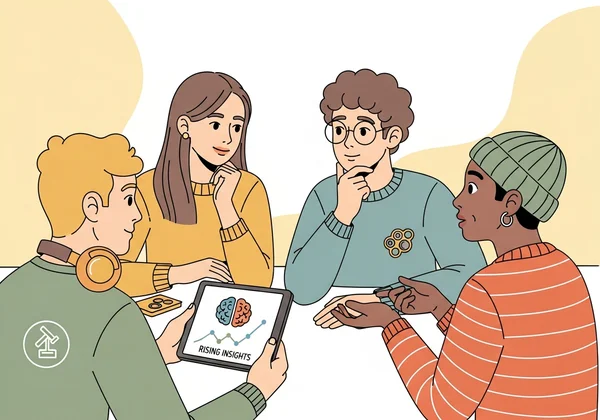
Understanding Your AQ Test Score & Relationship Dynamics
An Autism Quotient (AQ) test provides a score that reflects the number of autistic traits a person reports. It's important to remember that this is a screening tool, not a diagnosis. Think of it as a personalized map that highlights your cognitive landscape. A higher score suggests you have more traits commonly associated with the autism spectrum, which can significantly influence how you experience the world—and your relationships.
Understanding these traits helps build healthier dynamics. Rather than feeling ‘wrong,’ you’ll see you simply have a different way of processing the world. This perspective shift is powerful, allowing you and your loved ones to adapt and communicate more effectively.
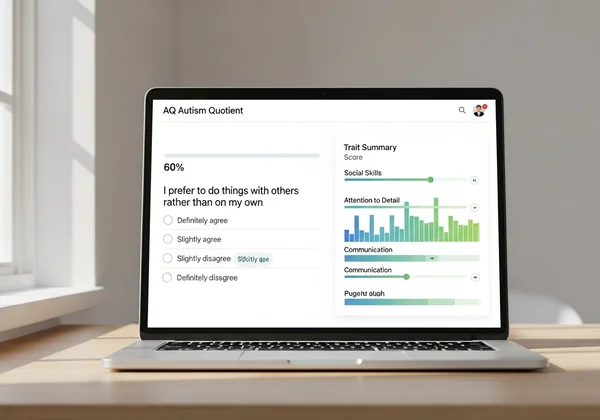
How AQ Traits Shape Social Interactions & Friendships
Friendships for neurodivergent individuals often look different from neurotypical norms, and that's perfectly okay. AQ traits can shape these interactions in specific ways. For example, a tendency towards direct and literal communication might be perceived as blunt by some, but it's a sign of honesty and a desire for clarity.
Many individuals with higher AQ scores thrive on deep, shared interests. They may not enjoy casual chit-chat but can talk for hours about a passionate subject. This can lead to incredibly strong, loyal friendships built on mutual respect and shared knowledge. On the other hand, navigating large group settings or interpreting subtle body language can be draining. Recognizing this allows you to choose social situations that play to your strengths and conserve your energy for the connections that truly matter.
Navigating Romantic Relationships with Neurodivergent Communication Styles
In romantic partnerships, different communication styles can become more pronounced. A neurodivergent partner might show love through practical acts of service or by sharing detailed information about a topic they care about, rather than through conventional verbal affirmations. Without understanding, a neurotypical partner might misinterpret this as a lack of emotional connection.
Sensory sensitivities, another trait measured by the AQ test, can also play a major role. A person sensitive to touch, sound, or light might need a different approach to intimacy and shared spaces. Openly discussing these needs builds trust. Tools like our explore your personalized AI report assessment guide self-awareness, helping partners accommodate each other. The key is to see these differences not as barriers, but as unique aspects of your partner that require understanding and respect.
Building Stronger Connections: Practical Strategies for Neurodivergent Adults
Learning about your neurotype is powerful—but applying that knowledge transforms relationships. Building stronger connections involves developing practical strategies that honor your needs while fostering understanding with others. It's about creating a communication bridge between your world and the world of those you care about.
These strategies are not about changing who you are. They are tools to help you express yourself more clearly and navigate social situations with greater confidence and less stress.
Enhancing Communication: Bridging the Neurotype Gap Effectively
Clear and effective communication is the cornerstone of any healthy relationship. For neurodivergent individuals, this often means being more explicit and direct than might feel natural for neurotypical people.
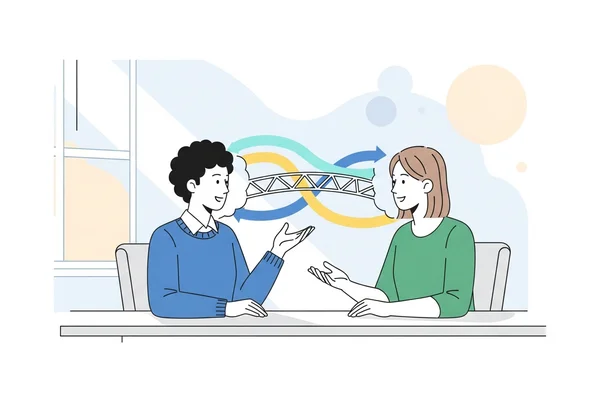
Here are some actionable strategies to try:
- Use "I" Statements: Frame conversations around your experience. For example, instead of saying "You're not being clear," try "I'm having trouble understanding. Can you explain it another way?"
- Clarify and Confirm: Don't be afraid to ask for clarification. Saying, "So what I hear you saying is..." ensures you are on the same page and prevents misunderstandings based on literal interpretation.
- Embrace Written Communication: For important or emotionally charged topics, writing things down in an email or text can be helpful. It removes the pressure of reading non-verbal cues and allows you to formulate your thoughts precisely.
- Schedule Check-Ins: Set aside regular, dedicated time with your partner or close friends to discuss how things are going in the relationship. This creates a safe space for open dialogue without the pressure of bringing things up "in the moment."
Managing Social Energy & Setting Healthy Boundaries in Relationships
Social interactions require energy, and for many neurodivergent people, that energy is a finite resource. Understanding your social battery is crucial for maintaining your well-being and showing up as your best self in relationships.
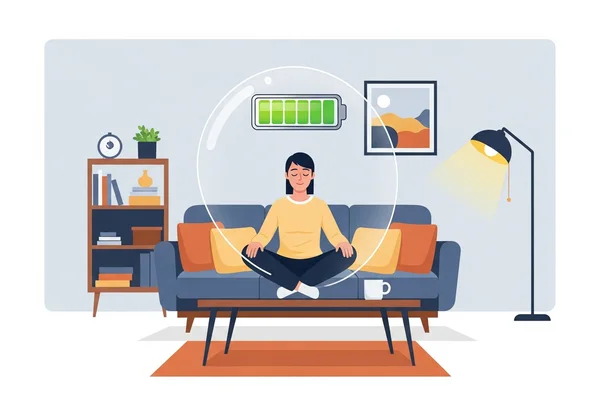
Social burnout is real and can lead to irritability and withdrawal. To prevent it, you must learn to set healthy boundaries. This isn't selfish; it's a necessary act of self-preservation. Examples of healthy boundaries include:
- Limiting your time at loud parties or large gatherings.
- Declining invitations without feeling obligated to give a detailed excuse. A simple "I can't make it, but thank you for inviting me" is enough.
- Scheduling downtime to recharge after social events.
- Communicating your needs clearly, such as, "I enjoy spending time with you, but I need some quiet time to myself now."
Leveraging Your Unique Strengths for Fulfilling Relationships
Your neurodivergent traits are not a list of deficits; they are a collection of unique strengths that can enrich your relationships. Shifting your perspective to see these qualities as assets is a powerful step toward building connections where you feel valued for exactly who you are.
Traits like intense focus, deep loyalty, a strong sense of justice, and outside-the-box thinking are superpowers in both friendships and romantic partnerships. Learn how your AQ test traits shape your relationship strengths in our free report. The goal is to find people and environments that celebrate these strengths.
Finding Your Tribe: Connecting Through Shared Interests & Values
One of the most effective ways for neurodivergent adults to form lasting bonds is by connecting through shared interests. Your deep passion for a specific topic isn't a quirky hobby; it's a gateway to community.

Whether it's a coding bootcamp, a board game club, a book discussion group, or an online forum dedicated to your favorite subject, these spaces are filled with people who already share your enthusiasm. In these environments, your depth of knowledge is appreciated, and conversations flow more naturally. Join communities that align with your interests so you can skip the dreaded small talk and dive straight into what excites you, forming connections based on genuine compatibility and mutual respect.
When & How to Seek Professional Support for Relationship Challenges
While self-understanding and practical strategies can go a long way, sometimes relationship challenges require outside support. Seeking help from a therapist or counselor, particularly one who specializes in neurodiversity, is a sign of strength.
A professional can provide a neutral space for you and your partner to work through communication issues and develop tailored strategies. They can act as a translator, helping each person understand the other's perspective. If you've taken an AQ test, sharing your results with a therapist can be an excellent starting point for a productive conversation. Remember, tools like an online AQ test provide valuable information, but they are not a substitute for professional medical advice or therapy.
Your Journey to Fulfilling Neurodivergent Relationships
Building and maintaining relationships as a neurodivergent adult is a unique journey, one that begins with self-awareness. By understanding your own mind, communication style, and social needs, you gain the power to shape your connections in a way that is authentic and sustainable.
Your traits are not obstacles to overcome; they are integral parts of who you are. The key takeaways are simple: embrace direct communication, honor your social energy limits, and connect with others through your genuine passions. These steps allow you to build relationships based on acceptance and mutual understanding.
This journey of discovery can feel overwhelming, but you don't have to navigate it alone. Gaining data-driven insights into your personal traits is a powerful and illuminating first step.
Ready to understand yourself better? Start your free AQ test on our homepage and unlock the optional AI-powered report for personalized insights into your strengths, challenges, and path to more fulfilling connections.
Frequently Asked Questions About AQ Test & Relationships
How does a high AQ test score influence friendships?
A high AQ score often correlates with deep loyalty, honesty, and a unique perspective that can make for an incredibly valuable friend. However, it may also mean challenges with interpreting subtle social cues or a preference for one-on-one interaction over large group settings. Understanding this can help you and your friends appreciate your style of connection.
Can the AQ test predict success in romantic relationships?
While your AQ score won’t predict compatibility, it helps you identify communication styles that could strengthen your relationship. This knowledge can empower you and your partner to communicate more effectively and understand each other's needs, which in turn can contribute to a healthier, more successful relationship.
What communication strategies are best for neurodivergent couples?
Directness, honesty, and clarity are key. Avoid ambiguity, sarcasm, or relying on non-verbal cues alone. Scheduling regular check-ins to discuss feelings and needs, as well as using written communication for complex topics, can be extremely effective for bridging communication gaps between different neurotypes.
Is the AQ test a diagnostic tool for relationship difficulties?
Absolutely not. The AQ test is a screening tool designed to measure autistic traits for informational purposes. It is not a medical diagnosis for autism or any other condition, nor does it diagnose relationship problems. If you are experiencing significant challenges, it is always best to consult with a qualified therapist or healthcare professional. You can explore the test to gain personal insights as a starting point.