Autism and Aging: Why Challenges Can Look Worse Over Time
If you're an autistic adult, you might have a nagging feeling that things are getting harder over time. Simple tasks may feel more draining, social situations more exhausting, and your overall capacity to cope seems to be shrinking. It’s a common and valid experience that can leave you wondering: does autism get worse with age? The short answer is no, but the challenges you face can absolutely intensify. This guide is here to explain exactly why that happens. We’ll explore the key factors behind this phenomenon—from long-term burnout to the growing pressures of adult life—and offer a clear path forward for better self-understanding and support. If you want a structured way to organize your observations, you can explore our AQ test online at any point while you read.
Why Autism Itself Doesn’t Worsen Over Time
First, let's clear up the most important point. The idea of autism getting worse with age is a common fear, but it's based on a misunderstanding of what autism is. Autism is not a progressive disease like multiple sclerosis or a condition that degenerates over time. It is a lifelong neurodevelopmental condition. This means your brain is wired differently, and that fundamental wiring doesn't change.
Think of it like a computer's operating system. An Apple computer running macOS will always be a Mac. It won't slowly turn into a Windows PC. However, if you load that Mac with increasingly demanding software, run too many programs at once, and never give it time to rest, it will start to lag, freeze, and perform poorly. The operating system hasn't gotten worse; the load on it has simply become unsustainable.
Similarly, your autistic neurotype remains constant. But the load from life's demands, social expectations, and sensory input can accumulate over decades, making it feel like your core traits are the problem. The issue isn't a worsening of autism, but a depletion of your resources to manage the world around you.
8 Key Reasons Autistic Challenges Feel More Intense in Adulthood
So, if autism itself isn't worsening, why does it often feel harder as you get older? The answer lies in the cumulative weight of various life factors. Here are eight of the most common reasons you might be struggling more now than you did in your youth.
The Cumulative Effect of Autistic Burnout
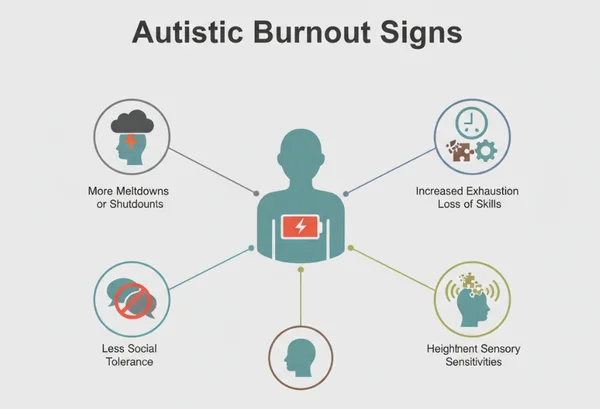
Autistic burnout is a state of profound physical, mental, and emotional exhaustion. It stems from the constant stress of navigating a world that isn't built for you. Unlike typical job burnout, it affects every area of your life and can lead to a significant loss of skills, increased sensitivity, and a reduced ability to cope.
Over years and decades, the small efforts of just getting through each day add up. Eventually, your battery doesn't just run low; it struggles to hold a charge at all. This is often the primary reason why autism and aging can feel like such a difficult combination.
Signs of Autistic Burnout to Watch For:
- Increased exhaustion that isn't fixed by sleep.
- Loss of skills (e.g., struggling with conversations or tasks that were once easy).
- Heightened sensory sensitivities.
- Less tolerance for social interaction.
- More frequent meltdowns or shutdowns.
The Lifelong Energy Drain of Masking and Camouflaging
Masking, or camouflaging, is the process of consciously or unconsciously hiding your autistic traits to fit in with neurotypical peers. This can involve forcing eye contact, mimicking social behaviors, or suppressing stims.
While it can be a useful survival strategy, it's also incredibly draining. It's like running a complex translation program in your head during every social interaction. Doing this for decades is unsustainable. As you age, you may simply run out of the energy required to keep the mask up, causing your natural traits to become more apparent and social situations to feel more overwhelming.
The Pressure of Increased Adult Responsibilities
Life gets more complicated with age. In your teens or twenties, your responsibilities might have been limited to school and a part-time job. As an adult, you're likely juggling a career, finances, household management, relationships, and possibly parenting.
Each of these domains requires significant executive function—the mental skills for planning, organizing, and managing tasks. For many autistic people, executive function is already a challenge. Piling on more responsibilities without adequate support can quickly lead to overwhelm, making it seem like your abilities are declining when, in reality, the demands have just exceeded your capacity.
The Impact of Chronic Stress and Unsupported Needs
This section directly addresses the question, can autism get worse if untreated? While autism isn't something to be treated like an illness, a lack of support, accommodations, and understanding is a form of chronic stress. Living for years without the right tools or environment to thrive takes a heavy toll.
Unsupported autistic needs lead to a constant state of high alert and anxiety. Over time, this chronic stress can degrade your physical and mental health, making you more susceptible to burnout and making every autistic trait feel sharper and more difficult to manage.
A Growing Mismatch with Your Environment
The environments that worked for you in the past may not work for you anymore. A bustling open-plan office, a noisy home with children, or a demanding social calendar can become deeply dysregulating as your tolerance for sensory and social input wanes. This growing mismatch between your needs and your environment is a major contributor to feeling overwhelmed in adulthood.
Why Challenges Can Intensify for Autistic Women
For many, the experience of autism getting worse with age in women is tied to two key factors. First, autistic women are often socialized to be master maskers, leading to more profound burnout later in life. Second, hormonal fluctuations, particularly during perimenopause and menopause, can have a significant impact on the nervous system. These changes can heighten anxiety, disrupt sleep, and worsen sensory sensitivities, making autistic traits feel much more difficult to manage.
The Compounding Impact of Co-Occurring Conditions
It's very common for autistic individuals to also have co-occurring conditions like anxiety, depression, or ADHD. These conditions don't exist in a vacuum; they interact with and often amplify autistic traits. The chronic stress of navigating an unaccommodating world can worsen these conditions over time, which in turn makes the autistic experience feel harder.
The Unique Pressures of Being Seen as High-Functioning
The question of does high-functioning autism get worse with age points to a painful paradox. The label high-functioning often means your struggles are invisible to others. You may be expected to perform at a neurotypical level without any accommodations. This creates immense pressure to constantly mask and over-exert yourself, making you exceptionally vulnerable to burnout. As you age, the ability to maintain this facade crumbles, and the underlying support needs you've had all along become impossible to ignore.
Can Life with Autism Actually Get Better With Age?
After exploring all the challenges, this might seem like a strange question. But the answer is a resounding yes. While the external pressures can increase, your internal landscape can change for the better. Aging with autism isn't just about accumulating challenges; it's also about accumulating wisdom.

The Power of Self-Awareness and a Late Diagnosis
For many adults, a late diagnosis or even just a self-realization of being autistic is a life-changing event. It provides a new framework for understanding your entire life. Suddenly, past struggles make sense. You can stop blaming yourself for things you found difficult and start seeing them as a natural part of your neurotype. This self-awareness is the first and most powerful step toward making things better.
Building a Life That Accommodates Your Needs
With self-awareness comes the power to make different choices. As you get older, you often have more agency to shape your life. You can learn to unmask, set boundaries, choose work that suits your strengths, and create a home environment that is a sensory sanctuary. You learn to stop trying to fit into a neurotypical world and start building a world that fits you. This process of self-accommodation can dramatically improve your quality of life, far outweighing the external pressures of aging.
How to Understand Your Own Traits and Find Clarity
Reading through this, you may be seeing your own life reflected in the descriptions of burnout, masking, and sensory overload. Understanding these concepts is a huge step. But the next logical question is often, How does this apply specifically to me? Moving from general information to personal insight is key to making meaningful changes.
Why a Structured Self-Review Can Be Your First Step
Thinking about your traits can feel chaotic. Are your struggles with social events due to introversion, social anxiety, or autistic social processing? Is your exhaustion just stress, or is it burnout? A structured self-review can help you cut through the noise. By considering specific questions about your social, sensory, and behavioral patterns, you can begin to organize your experiences into a clearer picture.
Introducing the AQ Test: A Tool to Organize Your Experiences
Our Autism Spectrum Quotient (AQ) test is designed to be exactly that—an educational tool to help you organize your experiences. It's a scientifically-validated questionnaire that prompts you to reflect on your traits across different domains. It is not a diagnostic test, but rather a starting point for self-exploration. It provides a structured framework to help you see patterns you may have never noticed before.
After you complete the free AQ questionnaire, you have the option to receive a personalized, AI-powered report. This report goes beyond a simple score. It helps connect your responses to the real-life concepts we've discussed, like social communication styles and attention to detail. It's a way to translate your intuitive feelings into concrete insights, giving you a valuable resource for your journey of self-discovery.
Please note: This is an educational screening tool, not a diagnostic test. Its results cannot replace a formal evaluation by a qualified professional.
Taking Proactive Steps Toward a More Sustainable Future
The feeling that autism gets worse with age is real, but it is not inevitable. It's a sign—a warning light that your current way of living is no longer sustainable. It’s a call to action to stop pushing through and start listening to your needs.
If things feel harder than they used to, a small, practical reset can help you identify what’s driving the change. Here’s a lightweight check-in you can try this week:
- Notice your biggest drains (sensory input, social demands, task-switching, unpredictability)
- Identify one accommodation you can test (more recovery time, quieter routines, clearer boundaries)
- Reduce one “must-mask” situation where it feels safe to do so
- Track what improves when you change the load (not just what you “push through”)
If your struggles are significantly impacting daily life, sleep, work, or relationships, consider reaching out to a therapist or clinician who understands adult autism. And if you want to gather your thoughts before you ask for support, you can use the AQ screening questionnaire to organize your observations and bring clearer examples into the conversation.
Frequently Asked Questions
Can autism symptoms change over time?
Core autistic traits do not change, but how they are expressed and the challenges they cause can shift significantly. This is usually due to external factors like stress, burnout, your environment, and the coping mechanisms you have available at different life stages.
How does stress affect autism in adults?
Stress acts like a magnifier for autistic traits. It depletes the mental and emotional resources needed for executive function and emotional regulation. This can make sensory sensitivities more intense, social interactions more draining, and increase the likelihood of meltdowns or shutdowns.
Is self-recognition the same as a diagnosis?
No. Self-recognition is a deeply personal and valid process of identifying with the autistic experience. A clinical diagnosis, however, is a formal evaluation conducted by a qualified professional. It is often necessary for accessing legal protections, workplace accommodations, or support services.
Do sensory issues change with age?
Yes, your tolerance for sensory input can decrease with age. This is often not because the input itself is stronger, but because your overall capacity to filter and process it has been reduced by chronic stress and burnout, making you feel more sensitive.
How does a late diagnosis help?
A late diagnosis can be incredibly validating. It provides a unifying explanation for a lifetime of experiences and struggles. This understanding empowers individuals to seek appropriate support, develop self-advocacy skills, and finally build a life that honors their neurological needs.