Autism Evaluation: What It Involves and How to Prepare
If you or someone you care about shows signs of autism, the idea of an autism evaluation can feel overwhelming. You might wonder what happens during the process, who conducts it, or how long it takes. Understanding these details can ease a lot of uncertainty and help you feel prepared for every step ahead. This guide walks you through the full autism evaluation process — from early screening to formal diagnosis — so you know exactly what to expect. You will also find practical checklists, common mistakes to avoid, and clear next steps. Whether you are exploring an AQ test for initial self-reflection or preparing for a professional assessment, this article has you covered.
What Is an Autism Evaluation and Why Does It Matter?
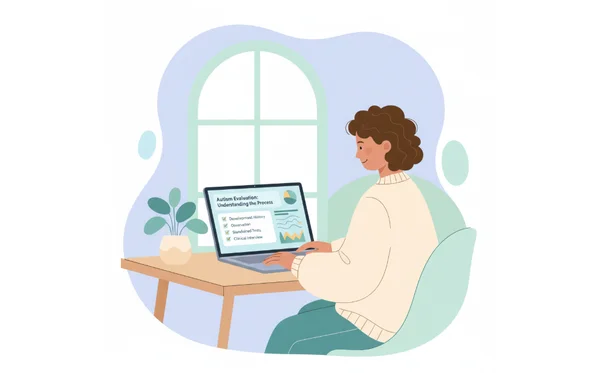
An autism evaluation is a comprehensive assessment designed to determine whether someone meets the diagnostic criteria for Autism Spectrum Disorder (ASD). Unlike a simple blood test or brain scan, there is no single medical test for autism. Instead, the evaluation relies on observation, structured interviews, and standardized tools.
This process matters because it provides clarity. A formal evaluation can confirm or rule out autism, identify co-occurring conditions, and open the door to appropriate support. For adults, an evaluation often validates years of feeling "different." For children, early identification leads to earlier intervention — and dramatically better outcomes.
Key reasons to pursue an autism evaluation:
- Gain a clear understanding of behavioral patterns and challenges
- Access accommodations at school or work
- Connect with therapy, support groups, and community resources
- Rule out or identify co-occurring conditions like ADHD or anxiety
- Build a personalized plan for growth and well-being
Who Can Perform an Autism Evaluation?
Not every healthcare provider is qualified to diagnose autism. The evaluation typically involves one or more specialists with specific training in neurodevelopmental conditions.
Qualified Professionals for Children
- Developmental pediatricians — doctors who specialize in childhood development
- Child psychologists or neuropsychologists — professionals trained in cognitive and behavioral testing
- Child psychiatrists — medical doctors who can also prescribe medication
- Speech-language pathologists — often part of a multidisciplinary evaluation team
Qualified Professionals for Adults
Finding an adult autism evaluator can be more challenging. Look for:
- Clinical psychologists with experience in adult autism assessment
- Psychiatrists specializing in neurodevelopmental conditions
- Neuropsychologists who assess brain-behavior relationships
When searching, verify that the provider specifically lists adult autism evaluation as an area of expertise. General mental health professionals may lack the specialized training needed for an accurate assessment.

What Happens During an Autism Evaluation?
The autism evaluation process typically unfolds across several sessions. While the exact steps vary by age and provider, most evaluations follow a similar structure.
Step 1: Initial Screening
The process often begins with a screening questionnaire. For children, pediatricians conduct developmental screenings at well-child visits (typically at 9, 18, and 24 or 30 months). Tools like the M-CHAT-R/F help identify early signs. For adults, screening instruments such as the Autism Spectrum Quotient (AQ) provide an initial indication of whether a full evaluation is warranted.
Step 2: Comprehensive Interview
A trained clinician gathers detailed information about the individual's developmental history, medical background, family history, and current challenges. For children, parents or caregivers provide most of this information. For adults, the evaluator may also speak with a close family member who observed the person during childhood.
Step 3: Direct Observation and Standardized Testing
This is the core of the evaluation. Common tools include:
- ADOS-2 (Autism Diagnostic Observation Schedule): A structured assessment where the clinician observes social interaction, communication, and behavior through guided activities
- ADI-R (Autism Diagnostic Interview-Revised): A detailed caregiver interview covering developmental history
- Cognitive and language assessments: Tests that measure IQ, verbal ability, and adaptive functioning
Step 4: Review and Diagnosis
After completing all assessments, the evaluation team compiles a comprehensive report. This report outlines:
- Whether the individual meets DSM-5 criteria for ASD
- Specific strengths and challenges identified
- Co-occurring conditions (if any)
- Recommendations for therapy, support, and next steps
How Is an Autism Evaluation Different for Adults?
An adult autism evaluation follows the same general framework, but several important differences exist. Many adults develop coping strategies — often called "masking" — that can obscure core autism traits. Because of this, adult evaluations often require more nuanced assessment.
Key differences include:
- Limited developmental history: Adults may not have access to early childhood records or a family member who can report on early development
- Masking behaviors: Women and individuals assigned female at birth are particularly likely to mask traits, making diagnosis more complex
- Co-occurring conditions: Anxiety, depression, and ADHD frequently co-occur with autism in adults and can complicate the diagnostic picture
- Longer evaluation timeline: Adult evaluations may take multiple sessions over several weeks
If you recognize similar patterns in yourself and want to begin reflecting on your experiences, exploring an autism spectrum quotient assessment can help you organize your thoughts before scheduling a professional evaluation.

How Much Does an Autism Evaluation Cost?
Cost is one of the most common concerns. Unfortunately, autism evaluation costs vary widely depending on location, provider, and insurance coverage.
Typical Cost Ranges
| Factor | Details |
|---|---|
| With insurance | Many plans cover diagnostic evaluations, especially for children. Check with your provider about coverage for developmental or neuropsychological testing. |
| Without insurance | Evaluations can range from $1,000 to $5,000 or more, depending on the provider and complexity. |
| University clinics | Training clinics at universities often offer evaluations at reduced rates. |
| Community programs | Some nonprofit organizations and state programs provide free or sliding-scale evaluations. |
Tips to Reduce Costs
- Call your insurance provider before scheduling to confirm coverage and in-network specialists
- Ask about payment plans or sliding-scale fees
- Explore public school evaluations for children (free under the Individuals with Disabilities Education Act)
- Look into Medicaid coverage, which may cover evaluations in many states
Common Mistakes to Avoid When Seeking an Autism Evaluation
Navigating the evaluation process can be tricky. Here are five mistakes that commonly delay or complicate the experience.
-
Choosing a generalist instead of a specialist. Not all therapists or doctors have training in autism assessment. Always confirm the provider's specific experience with autism evaluations.
-
Waiting too long to act. For children, early evaluation leads to earlier intervention. For adults, delaying an evaluation can mean years without the right support.
-
Not gathering developmental history in advance. Bring school records, past medical evaluations, and any notes about developmental milestones. This information significantly speeds up the process.
-
Expecting instant results. A thorough evaluation takes time — usually multiple sessions. Avoid providers who promise a same-day diagnosis without comprehensive testing.
-
Confusing screening with diagnosis. Online screeners and self-assessments are helpful starting points, but they are not diagnostic tools. They can guide your decision to seek a professional evaluation, but they cannot replace one.
How to Prepare: A Practical Checklist Before Your Evaluation
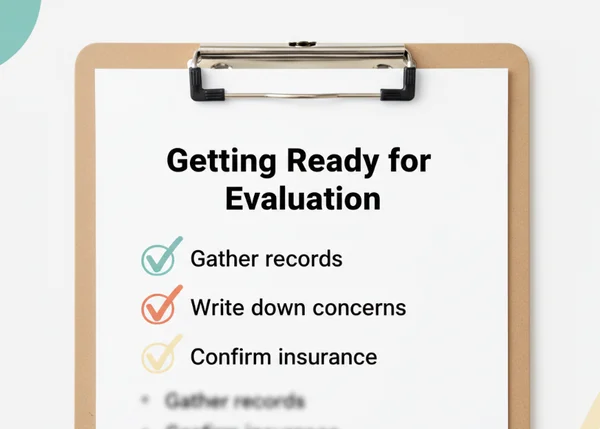
Preparation makes the evaluation smoother and more productive. Use this checklist to get organized.
Before the appointment:
- Confirm your insurance coverage and any required referrals
- Gather developmental records (school reports, previous evaluations, medical history)
- Write down your main concerns and specific examples of behaviors or challenges
- If possible, ask a family member to share early childhood observations
- Prepare a list of questions to ask the evaluator
On the day:
- Bring all collected documentation
- Allow extra time — sessions can run 2 to 4 hours
- Eat well and rest beforehand, especially if the evaluation involves your child
- Bring comfort items for children (a favorite toy or snack)
After the evaluation:
-
Schedule a follow-up meeting to review the report
-
Ask for specific recommendations and referrals
-
Connect with local autism support organizations for next steps
What Comes After a Diagnosis?
Receiving an autism diagnosis — whether for yourself or your child — is a significant moment. However, a diagnosis is not an endpoint. It is a starting point for understanding and support.
Common next steps include:
- Therapy and intervention: Applied Behavior Analysis (ABA), speech therapy, occupational therapy, and social skills training are frequently recommended
- Accommodations: Schools can develop Individualized Education Programs (IEPs), and workplaces can provide reasonable accommodations
- Community connection: Support groups and autism advocacy organizations offer valuable peer support
- Self-understanding: Many adults report that a diagnosis finally explains lifelong experiences and opens the door to self-compassion
Remember, a diagnosis does not define you or your child. It is one piece of information that can help guide decisions and unlock resources.
Your Next Step Toward Self-Understanding
If you have been reading this article and recognizing familiar patterns, you might be wondering where to begin. A professional evaluation is the most reliable path to a formal diagnosis, but reflecting on your own experiences first can be incredibly valuable.
An online self-assessment tool — like the AQ test — can help you organize your thoughts and identify areas you may want to discuss with a specialist. These tools are not diagnostic, and they cannot replace a professional evaluation. However, they offer a low-pressure way to explore your traits and build a clearer picture of your experiences.
This content is for educational purposes only. It is not a substitute for professional medical advice, diagnosis, or treatment. If you have concerns about autism, consult a qualified healthcare provider.
Take a moment to explore the AQ test at AQTest.org — it is free, immediate, and designed to help you reflect on your unique patterns.
Frequently Asked Questions
What does an autism evaluation consist of?
An autism evaluation typically includes developmental history interviews, direct observation, standardized assessments like the ADOS-2, and cognitive or language testing. The process usually spans multiple sessions and results in a comprehensive diagnostic report.
How long does an autism evaluation take?
Most evaluations take between 2 and 8 hours of direct assessment time, often spread across multiple appointments over several weeks. The timeline depends on the provider, the individual's age, and the complexity of the case.
How much does it cost to get evaluated for autism?
Costs range from free (through school systems or public programs) to $5,000 or more without insurance. Many insurance plans cover diagnostic evaluations, especially for children. Contact your provider to verify coverage before scheduling.
Can a primary care doctor diagnose autism?
Primary care doctors can conduct initial screenings and refer you to specialists. However, a formal autism diagnosis is typically made by a psychologist, psychiatrist, developmental pediatrician, or neuropsychologist with specialized training.
How do you get evaluated for autism as an adult?
Start by consulting your primary care physician for a referral to a specialist experienced in adult autism evaluations. You can also search for psychologists or neuropsychologists who specifically list adult autism assessment as a specialty.
Is an autism evaluation covered by insurance?
Many insurance plans cover autism evaluations, particularly for children. Coverage for adults varies. Always call your insurance provider before scheduling to confirm benefits and find in-network specialists. Medicaid may also provide coverage in many states.
What is the difference between autism screening and a full evaluation?
Screening is a brief, initial step (like a questionnaire) that indicates whether further assessment is needed. A full evaluation is a comprehensive, multi-hour process conducted by specialists that leads to a formal diagnosis and personalized recommendations.