Do Autistic People Have Empathy: Debunking the Cold Myth
You might have heard the stereotype. Perhaps a well-meaning relative suggested you lack feelings, or a pop-culture portrayal showed an autistic character behaving like a robot. This pervasive myth that autistic people lack empathy is not only hurtful; it is fundamentally incorrect.
So, do autistic people have empathy? The short answer is yes. However, the way you experience, process, and express that empathy might look different from the neurotypical norm. For many, the challenge isn't a lack of feeling—it is feeling too much or struggling to read the unwritten social rules of how to show it.
This guide will break down the science of empathy, validate your personal experiences, and help you understand your unique emotional profile. If you are curious about where your traits fit on the spectrum, you can take the Autism Spectrum Quotient (AQ) test to start your journey of self-discovery.
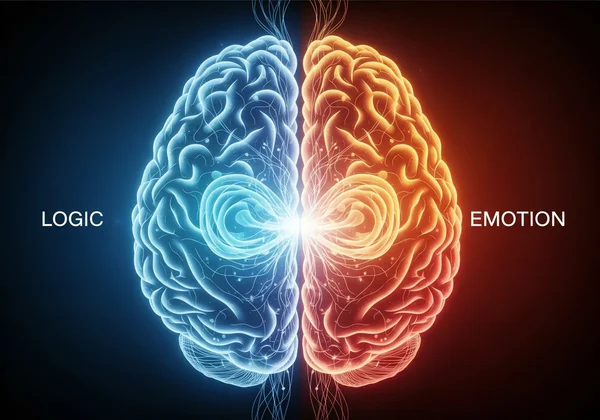
The Two Faces of Empathy: Cognitive vs. Affective
To understand why the myth of the "cold autistic person" exists, we need to split the concept of empathy into two distinct parts. Most people treat empathy as a single skill, but psychologists distinguish between Cognitive Empathy and Affective Empathy.
Autistic individuals often have a "spiky profile" regarding these two types. While one might be lower than average, the other can be incredibly high.
Cognitive Empathy: The Struggle to Read Social Cues
Cognitive empathy is the ability to intuitively know what someone else is thinking or feeling. It is often described as "perspective-taking" or "reading the room."
For many autistic people, this is the stumbling block. You might struggle to:
- Interpret subtle facial expressions or tone of voice.
- Understand sarcasm or implied meanings.
- Predict how your words might land with someone else.
Because you might miss these invisible social cues, others may mistakenly assume you don't care. In reality, you simply didn't receive the "signal" that an emotional response was required.
Affective Empathy: Feeling Others' Emotions Deeply
Affective empathy (or emotional empathy) is the capacity to feel an appropriate emotional response to another person's state.
Research consistently shows that autistic people often have intact—or even heightened—affective empathy. When you do realize someone is in pain, you might feel that pain viscerally in your own body. You care deeply; the disconnect often happens in the translation between feeling that care and knowing how to perform the socially expected reaction.
Visualizing the "Spiky Profile"
Imagine empathy as a sound mixing board.
- Neurotypical Profile: Both "Cognitive" and "Affective" sliders are set to a medium level.
- Autistic Profile: The "Cognitive" slider might be set low (making it hard to read inputs), while the "Affective" slider is pushed to the max (creating intense emotional output).
Understanding this difference is key to self-acceptance. You aren't broken; your mixing board is just calibrated differently.
The Paradox of Hyper-Empathy: When You Feel Too Much
If the stereotype says autistic people feel nothing, why do so many on the spectrum report feeling exhausted by other people's emotions? This is known as hyper-empathy.
Do autistic people have empathy? Sometimes, the answer is "too much."
From Overwhelm to Shutdown: Is it Apathy or Protection?
Have you ever seen someone crying and felt a wave of distress so strong that you physically froze? This is a common experience. When affective empathy is dialed up too high, it can lead to emotional flooding.
To an outside observer, this freezing response looks like coldness or indifference. They see you staring blankly or walking away. But internally, you are not feeling nothing; you are feeling everything all at once. Your brain initiates a shutdown to protect you from short-circuiting.
The Link Between Sensory Overload and Emotional Pain
Autism is inextricably linked to sensory processing. Just as fluorescent lights or loud sirens can cause pain, "loud" emotions can trigger a similar sensory overload.
- The Trigger: A friend is shouting or sobbing.
- The Input: Your brain processes the raw emotional data as high-intensity noise.
- The Reaction: You may withdraw, cover your ears, or go non-verbal to manage the input.
It is crucial to recognize that this withdrawal is a survival mechanism, not a lack of compassion.
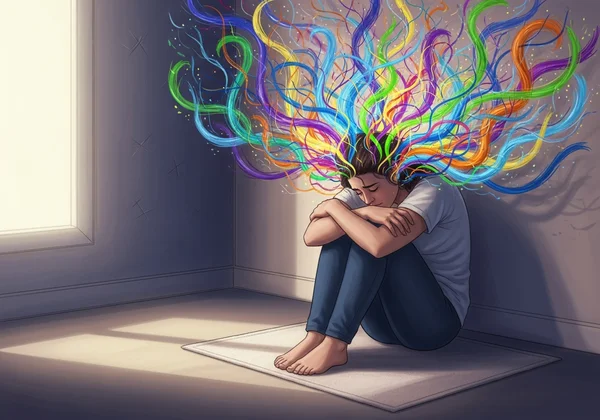
Deep Connections: Empathy for Animals and Inanimate Objects
One of the most distinct and rarely discussed aspects of autistic empathy is the profound connection many feel toward non-human entities. If you have ever felt genuine guilt for throwing away a broken toy or picking one stuffed animal over another, you are not alone.
Why Objects and Animals Can Feel Safer Than People
Interacting with humans is complicated. Humans have hidden agendas, changing social rules, and unpredictable reactions. Animals and inanimate objects, however, are safe.
- Predictability: A dog will not judge your eye contact. A favorite stone or plushie will always be there for you.
- No Masking Required: You can be your authentic self without filtering your behavior.
This safety allows your affective empathy to flow freely without the barrier of cognitive empathy struggles. You don't need to "read" a stuffed animal to love it.
The Science Behind Personifying Objects
This trait is often linked to anthropomorphism—attributing human feelings to non-human things. While everyone does this to some degree (like naming a car), autistic people often experience it with high intensity.
You might worry that an object feels "lonely" or "left out." This is actually strong evidence against the idea that autistic people lack empathy. Your capacity for care is so surplus that it spills over onto the inanimate world around you. Far from being a deficit, this demonstrates a boundless capacity for connection—just directed where it feels safest.
The Double Empathy Problem: It’s a Two-Way Street
For decades, the medical model blamed communication breakdowns entirely on autistic people. However, newer research introduced the Double Empathy Problem.
This theory suggests that communication struggles are a two-way street. It is not just that autistic people struggle to understand neurotypicals; neurotypicals are equally bad at understanding autistic people.
Bridging the Gap Between Different Minds
Think of it as a language barrier. A neurotypical person speaks "French," and an autistic person speaks "German." Neither language is wrong, but without a translator, misunderstandings occur.
When a neurotypical person assumes your lack of eye contact means you are lying, they are lacking cognitive empathy for your experience. They are failing to take your perspective. Acknowledging this can relieve a lifetime of guilt. You are not solely responsible for every awkward interaction.
How Autistic Care is Expressed: Infodumping and Practical Help
Because of these differences, autistic love languages often look different. You might not offer a hug (which can be sensory hell), but you might show empathy by:
- Infodumping: Sharing facts about a special interest to distract or cheer someone up.
- Practical Solutions: Fixing the broken item that caused the sadness instead of offering platitudes.
- Parallel Play: Simply sitting in the same room quietly with someone.
Recognizing these valid forms of care is essential for building healthier relationships.
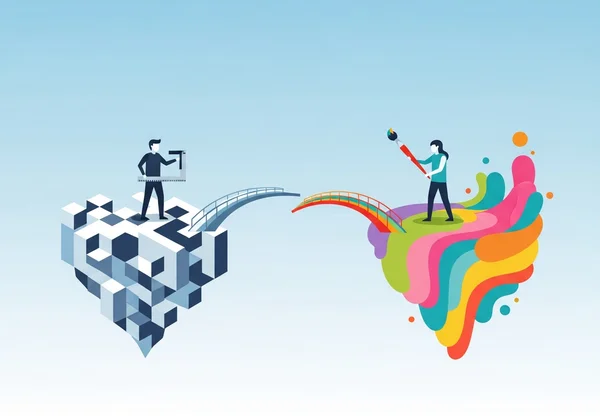
Understanding Your Unique Emotional Profile
By now, you may realize that the question "do autistic people have empathy?" is far too simple. The real question is: How does your specific empathy profile function?
Understanding yourself is the first step toward managing overwhelm and improving relationships.
Why Self-Reflection is the First Step to Clarity
If you have spent your life feeling "wrong" for not reacting the way others do, self-knowledge is power. Recognizing that you might struggle with cognitive empathy but excel at affective empathy allows you to:
- Forgive yourself for past social "mistakes."
- Explain your needs to friends and family.
- Protect your energy before you hit shutdown mode.
Using the AQ Test as a Tool for Insight
If the descriptions of cognitive struggles, hyper-empathy, or deep connection to objects resonate with you, it might be helpful to explore further.
We provide a comprehensive autism test online that serves as a tool for self-reflection. It is not a medical diagnosis, but a scientifically validated screening instrument designed to highlight where your traits lie on the spectrum.
What Your Score Can Reveal About Your Traits
Taking the AQ test can provide a structured way to look at your behaviors. It assesses various domains, including social skills and attention switching, which are directly related to how you experience empathy.
- Identify Patterns: See if your social friction is a consistent pattern rather than isolated incidents.
- Validate Experiences: Seeing a score that aligns with your internal reality can be incredibly validating.
- Start the Conversation: Results can be a helpful starting point if you decide to speak with a therapist.
Check your traits with this AQ assessment to gain a clearer picture of your neurodivergent profile.
Embracing Neurodiversity: Different, Not Deficient
Do autistic people have empathy? Yes. It is often deep, sometimes overwhelming, and occasionally directed at things others might overlook.
The goal is not to force yourself to perform neurotypical empathy, but to understand and honor the way you connect with the world. Your empathy is not broken; it is simply speaking a different, equally beautiful language.
Frequently Asked Questions
Can autistic people have high empathy?
Yes. Many autistic people experience "affective empathy" very intensely. They may feel the emotions of others so strongly that it becomes physically painful or overwhelming, leading to a state known as hyper-empathy.
Is lack of empathy required for an autism diagnosis?
No. The DSM-5 diagnostic criteria mention deficits in "social-emotional reciprocity," which refers more to the back-and-forth flow of social interaction (cognitive empathy) rather than the inability to care about others (affective empathy).
Do high-functioning autistic people lack empathy?
Generally, no. Individuals often labeled as "high-functioning" (or Level 1 ASD) typically struggle with reading social cues (cognitive empathy) but often report average or above-average levels of emotional concern for others. They may mask their confusion, which can be exhausting.
Is autism the same as sociopathy or narcissism?
No. Sociopathy (Antisocial Personality Disorder) and Narcissism involve a lack of care for others or an intent to manipulate. Autistic people usually care deeply but may not know how to express it socially. The intent behind the behavior is fundamentally different.
Can empathy skills be learned?
Cognitive empathy skills can be learned. Through therapy, practice, and logic, autistic people can learn to recognize social cues and understand different perspectives intellectually, even if it doesn't come intuitively. Affective empathy (caring) is usually innate and does not need to be "learned."