Do I Have Asperger's? Signs Adults Notice and What to Do Next
If you have been searching "do I have Aspergers," you may be trying to name a pattern that has followed you for years: social rules that feel manual, routines that keep life steady, sensory overload that others miss, or a sense of being different without knowing why. Today, Asperger's is usually understood within autism spectrum disorder rather than as a separate formal label. Still, many people use the word because it matches their history or identity. This guide is for calm self-reflection, not medical advice. If you want a private starting point, a supportive AQ self-reflection tool can help you organize what you notice before deciding whether to seek a professional assessment.

What "Asperger's" Means Today
In everyday search language, "Asperger's" often means autism traits without an obvious early language delay or intellectual disability. In current clinical language in many places, those traits are usually assessed under autism spectrum disorder. That shift matters because it keeps the focus on support needs, strengths, and day-to-day functioning rather than trying to place every person into an older category.
The word can still be meaningful. Some adults were given the older label years ago. Others found it through books, forums, or family conversations. The key is to treat the term as a clue, not a final answer. A useful question is not "Which label proves who I am?" but "Which patterns show up across my life, and what support would make life easier?"
Autism traits vary widely. One person may speak fluently but struggle with hidden social expectations. Another may manage work well but feel exhausted after constant masking. Someone else may have strong sensory needs, intense interests, and a deep preference for predictability. None of these signs alone can settle the question, but patterns across time can be worth exploring.
Common Adult Patterns That Make People Ask "Do I Have Aspergers?"
Many adults begin wondering because the same situations keep becoming harder than expected. A single awkward conversation, a dislike of parties, or a narrow hobby is not enough. The signal is stronger when several patterns appear early, continue across settings, and affect energy, relationships, work, school, or daily routines.
Social communication may feel manual
You may understand language well but find live interaction tiring. Small talk can feel like a script you have to run in real time. Eye contact may be uncomfortable, distracting, or something you perform because you learned it was expected. You might miss indirect hints, take words literally, speak in a very detailed way, or realize later that other people were using tone, facial expression, or context you did not catch.
This does not mean you lack empathy. Many autistic adults care deeply but show care differently, need more processing time, or struggle to read social cues under pressure. A helpful self-check is whether social confusion keeps happening even when you are trying hard and whether recovery time after interaction is unusually long.
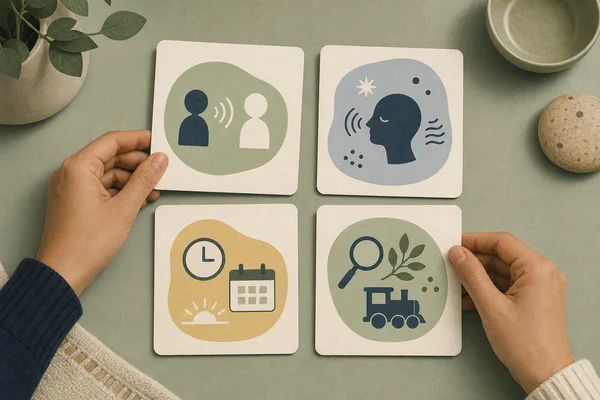
Routines, interests, and sensory needs may be intense
Another pattern is a strong need for sameness or predictability. Changes to plans may feel more disruptive than other people expect. You may return to the same foods, routes, topics, clothes, or work systems because they reduce friction. Focused interests can be a source of joy, expertise, and identity, but they may also become hard to pause when life demands a switch.
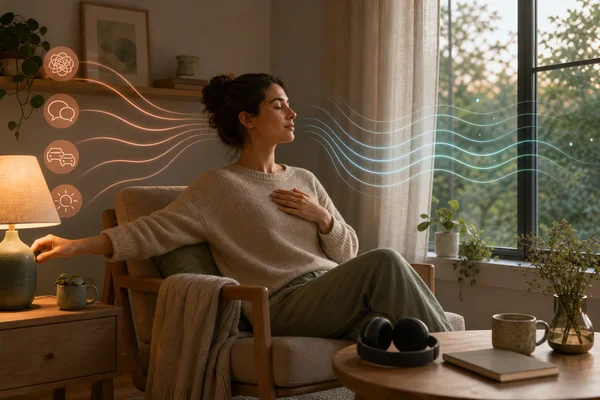
Sensory experiences can be part of the picture too. Sounds, lights, textures, smells, temperatures, or crowded spaces may drain you quickly. Some people seek pressure, movement, or repetitive actions because these help regulate attention and emotion. These patterns are especially relevant when they are long-standing and connected to stress, shutdown, irritability, or avoidance.
Life history matters more than one awkward week
When people ask "do I have mild Aspergers," they often point to a recent period of social stress. Recent stress matters, but a fuller picture looks backward too. Were you called shy, intense, blunt, sensitive, gifted, rigid, dramatic, or "old for your age" as a child? Did friendships require more analysis than they seemed to require for others? Did you copy peers to blend in? Did you feel confused by group rules that were never explained?
Adult self-reflection is strongest when it includes examples from childhood, adolescence, work, relationships, family life, sensory settings, and transitions. If possible, write down specific situations rather than general labels. "I hate parties" is less useful than "after two hours of overlapping voices, bright lights, and unplanned conversation, I need a full day alone to recover."
Do I Have Asperger's Female, Male, or Just Masked?
Searches like "do I have Aspergers female" and "do I have Asperger's male" point to a real problem: many people learned a narrow stereotype of autism. Autism does not look one way. Men, women, and nonbinary people can all mask, compensate, rehearse, suppress stimming, force eye contact, or copy social behavior. Some women and girls have been missed because their traits were interpreted as anxiety, perfectionism, sensitivity, or social effort rather than autism-related differences.
Masking can make the outside picture look smooth while the inside cost is high. You might appear friendly, expressive, or organized, then collapse in private. You might maintain conversation by preparing topics, tracking facial expressions, and reviewing mistakes afterward. You might have friends but still feel like every interaction requires translation.
It is also possible to be socially anxious, introverted, trauma-affected, ADHD, OCD, or simply under-supported without being autistic. The point is not to force one explanation. The point is to ask which explanation best accounts for your full history, including strengths, stress patterns, sensory needs, routines, communication style, and recovery time.
Asperger's, ADHD, OCD, Anxiety, or Social Awkwardness?
Many people wonder whether they have Asperger's or ADHD, OCD, anxiety, social anxiety, or "just" awkwardness. These can overlap, and more than one can be present. ADHD may involve attention regulation, impulsivity, time blindness, and novelty seeking. Autism may involve social-communication differences, sensory differences, preference for predictability, and focused interests. OCD often centers on intrusive thoughts and compulsions done to reduce distress. Social anxiety may center on fear of negative judgment.
The differences are not always neat. For example, a person may avoid parties because of fear of embarrassment, sensory overload, confusing group dynamics, or all three. Someone may repeat actions because of comfort, routine, sensory regulation, or intrusive fear. That is why a careful assessment looks at context, development, motivation, and impact, not just a checklist.
If you are trying to sort this out, compare patterns rather than labels. What happens when you are alone? What happens with trusted people? Are routines enjoyable, necessary, fear-driven, or calming? Do social struggles come from not knowing the rule, fearing judgment, losing focus, or processing too much sensory input at once? The answer may point to the most useful support path.

How an Asperger's Test for Adults Can Help Without Deciding for You
An Asperger's test for adults or an AQ-style screener can be helpful when you use it as a structured mirror. It can turn vague feelings into topics: communication, attention switching, imagination, social comfort, detail focus, and routine. The value is not that a score can define you. The value is that your answers can help you notice patterns and prepare better questions.
If you use a private autism-trait screening starting point, read the result as information for reflection. A high score may suggest that further professional assessment could be worth considering. A lower score does not erase your lived experience, especially if masking, wording, culture, gender expectations, or co-occurring conditions shape how you answer.
For the best use of a screener, take notes while you answer. Which questions felt easy? Which felt too blunt? Which ones made you think, "It depends who I am with"? Those reactions can be as useful as the number. You can bring them to a therapist, physician, psychologist, occupational therapist, or autism-informed clinician if you choose to discuss your concerns.

What to Do If You Think You Have Asperger's
Start by collecting examples, not verdicts. Create a simple two-column note: "pattern I notice" and "real-life example." Include social communication, sensory input, routines, focused interests, emotional regulation, transitions, school or work history, relationships, and recovery time. Add strengths too, such as deep focus, honesty, pattern recognition, loyalty, creativity, or strong memory for detail.
Next, adjust one small environment variable. Try lower lighting, noise reduction, written instructions, transition time, clearer calendar blocks, sensory-friendly clothing, or planned decompression after social events. If a change helps, that is useful whether or not you later pursue formal assessment.
You can also choose who to talk with. Some people begin with a primary care provider, therapist, or psychologist. Others start with an autism-informed counselor or local assessment service. If cost, waitlists, or location are barriers, organized self-notes can still help you communicate clearly when an appointment becomes possible.
Be careful with online communities. Searches like "do I have Aspergers Reddit" can lead to relatable stories, useful vocabulary, and a sense of not being alone. They can also make everything feel more certain than it is. Treat forums as lived-experience support, not as a final answer about you.
A Calmer Way to Explore Do I Have Asperger's
The question "do I have Asperger's?" often appears when someone is tired of explaining themselves with words like lazy, rude, picky, awkward, dramatic, or weird. A kinder approach is to replace judgment with pattern-finding. What has been consistent? What drains you? What helps you function? Which strengths have been overlooked because the environment did not fit you well?
If you want a low-pressure place to organize those observations, you can review an AQ-based self-understanding resource and use the result as one piece of a larger reflection. Bring curiosity, not urgency. Whether your next step is reading, adapting your environment, talking with a professional, or simply giving yourself better language, the goal is clearer self-understanding and more workable support.
FAQ
How do I know if I'm Asperger?
You cannot know from one trait or one online score. The more useful question is whether you have a long-standing pattern of social-communication differences, sensory needs, repetitive or routine-based behaviors, focused interests, and life impact. If those patterns feel familiar, consider writing examples and discussing them with an autism-informed professional.
What are the 5 main symptoms of Asperger's?
People often mean five common areas: social communication differences, difficulty reading nonverbal cues, intense interests, preference for routine or sameness, and sensory sensitivities. Not everyone has the same mix, and current language usually places these traits under autism spectrum disorder.
What can missed Asperger's look like in adults?
It may look like chronic social exhaustion, feeling out of step with group rules, strong routines, sensory overload, deep interests, shutdown after busy environments, or years of masking. It can also be mistaken for anxiety, ADHD, OCD, introversion, or personality style, which is why context and history matter.
Do I have Asperger's or am I just socially awkward?
Social awkwardness is usually narrower. Autism-related traits tend to involve a broader, long-term pattern that may include sensory differences, routines, focused interests, transition difficulty, communication differences, and recovery needs. If the pattern affects daily life, it may be worth exploring more carefully.
Can a free Asperger's test for adults tell me for sure?
No. A free screener can help you reflect on traits and decide whether to seek more support, but it cannot settle the question by itself. Use the result alongside your history, examples from daily life, and professional guidance when available.
Does Sheldon have Asperger's?
Sheldon Cooper is a fictional character, not a real person who can be clinically assessed. Many viewers see autistic-coded traits in him, while the show's creators have not made Asperger's or autism an official part of the character. Fiction can start conversation, but it should not be your model for deciding what autism must look like.
What billionaire has autism?
Elon Musk publicly said he has Asperger's during a 2021 Saturday Night Live monologue. Celebrity examples can raise awareness, but they should not be used as a yardstick. Autism traits are diverse, and your own support needs matter more than comparison with any public figure.