Free AQ Test Insights: Understanding Stimming Benefits and Types in Autism for Adults
Have you ever found yourself tapping your fingers, rocking gently, or pacing back and forth while deep in thought? These repetitive movements, known as stimming, are a universal human behavior. For many neurodivergent adults, particularly those on the autism spectrum, these actions are not just habits—they are essential tools for self-regulation, focus, and emotional expression.
But what exactly is stimming, and why is it so important? This guide will explore the world of self-stimulatory behavior in adults. We'll cover its purpose, the different forms it can take, and its many benefits. We'll also discuss how understanding your own traits through a tool like the free AQ test can provide valuable insights into your personal regulatory needs and preferences.

What is Stimming? Understanding Autistic Self-Regulatory Behaviors
Stimming, short for self-stimulatory behavior, refers to repetitive actions or movements that a person uses to regulate their sensory and emotional state. While everyone stims to some degree—think of bouncing your leg when nervous or twirling your hair when bored—for autistic individuals, stimming often serves a more profound and necessary purpose. It's a fundamental way to interact with and manage a world that can often feel overwhelming.
More Than Just Fidgeting: The Purpose Behind Self-Stimulatory Actions
Stimming isn't random. It's a smart coping tool. It helps manage your inner feelings and outer world. The core purposes behind stimming include:
- Emotional Regulation: It can be incredibly calming during moments of high stress, anxiety, or excitement, helping to prevent emotional overwhelm.
- Sensory Management: Stimming can block out distressing sensory input (like loud noises or bright lights) or provide needed sensory input when feeling under-stimulated.
- Improved Focus: Repetitive motions can help filter out distractions, allowing for better concentration on a task or thought process.
- Self-Expression: Sometimes, stimming is simply an outward expression of joy, excitement, or other strong emotions that are difficult to convey with words.
Healthy Stimming vs. Maladaptive Behaviors: Understanding the Nuances
The vast majority of stims are harmless, healthy, and beneficial. Actions like rocking, hand-flapping, or humming are positive ways to self-soothe and regulate. These behaviors should be understood and accepted, not suppressed.
However, it's important to distinguish healthy stimming from maladaptive behaviors. A behavior is considered maladaptive if it causes physical harm to the individual (such as head-banging or severe skin-picking) or significantly interferes with their safety and daily life. Does a stim cause injury or distress? Talk to a healthcare pro. They can suggest safer ways to self-regulate.
The Diverse Forms: Common Types of Stimming in Adults
Stimming is incredibly diverse and unique to each individual. What works for one person may not work for another. These behaviors can be categorized into several common types, many of which may not be immediately obvious to an outside observer.
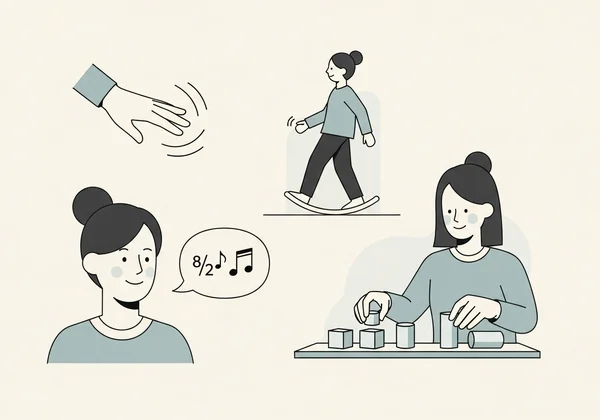
Motor Stims: Visual, Tactile, and Auditory Movements
These are often the most recognized forms of stimming and involve physical body movements.
- Visual: Flicking fingers in front of the eyes, staring at spinning objects, or repeatedly blinking.
- Tactile: Rubbing soft textures, scratching or picking at skin, or clenching and unclenching fists.
- Auditory/Vestibular: Tapping fingers on a surface, clicking a pen, rocking back and forth, or spinning.
Vocal Stims: Sounds, Words, and Self-Soothing Utterances
Vocal stimming involves using the voice or making sounds for regulation. This is not always about communication with others.
- Repetitive humming, grunting, or throat-clearing.
- Repeating certain words or phrases (echolalia).
- Making clicking or popping sounds with the mouth.
Complex Stims: Routines, Rituals, and Internalized Self-Regulation
Some stims are more complex and may look like routines or rituals. They can also be subtle or entirely internal.
- Pacing in a specific pattern or path.
- Arranging and rearranging objects in a particular order.
- Re-reading a favorite paragraph or listening to the same song on repeat.
- Mental stims, such as replaying conversations or tracing patterns in one's mind.
The Benefits of Stimming: Why Neurodivergent Adults Need These Behaviors
Far from being a negative trait to be eliminated, stimming is a vital coping strategy that offers significant benefits. Embracing and understanding stimming is a key part of supporting neurodivergent individuals and practicing self-acceptance.
Self-Soothing and Emotional Regulation: Calming Overwhelm
When faced with overwhelming sensory information or intense emotions, the brain can feel like it's short-circuiting. Stimming provides a predictable, rhythmic, and focused output that helps calm the nervous system. Repetition lowers cortisol, the stress hormone. It also brings control and safety amid chaos.
Enhancing Focus and Processing Information
Have you ever doodled during a long meeting to stay engaged? Stimming works on a similar principle. For a neurodivergent mind, it can provide just the right amount of background sensory input to prevent distraction or under-stimulation. This allows cognitive resources to be directed toward the primary task, whether it's learning something new, solving a problem, or listening to a conversation.
Communication, Joy, and Self-Expression
Stimming can be a pure and unfiltered expression of feeling. An autistic person might flap their hands when they are incredibly happy or excited, conveying a depth of emotion that words cannot capture. It is a natural and authentic part of their communication style. Seeing stimming as a language of emotion, rather than just a symptom, is a powerful shift in perspective.
Connecting Stimming to Your AQ Score: Insights from the Test
If you recognize some of these behaviors in yourself, you might be curious about where they fit into your overall personality and cognitive profile. The Autism Spectrum Quotient (AQ) test is a scientific screening tool designed to measure autistic traits in adults. It can be a helpful first step in understanding your unique neurotype.

AQ Dimensions and Stimming: Social Skills, Attention Switching, and Sensory Processing
Developed by Professor Simon Baron-Cohen at the University of Cambridge, the AQ test assesses traits across five key domains. While it doesn't ask about "stimming" directly, the results can provide clues about why you might stim. For example:
- Attention to Patterns & Detail: A strong preference for patterns and predictability might relate to finding comfort in repetitive, rhythmic stims.
- Attention Switching: Difficulty switching focus can make the world feel chaotic. Stimming can be a way to create a single, stable point of focus.
- Social & Communication Skills: If social situations are draining, stimming might be a way to self-soothe before, during, or after interactions.
By taking an online AQ test, you can see how your traits score across these different areas, offering a structured framework for self-reflection.
How an AI-Generated AQ Report Can Help You Understand Your Stims
Getting a simple score is useful, but true insight comes from understanding what that score means for you. On our platform, you have the option to receive a personalized AI-generated report after completing the test. This report goes beyond the numbers to connect your answers to real-world experiences.
It can help you understand how your sensory preferences or attention style might lead to specific self-regulatory behaviors. An AI-powered report can offer personalized insights, potential strengths, and challenges, helping you make sense of why you do what you do—including how and why you stim.
Navigating Stimming: Tips for Self-Acceptance and Healthy Integration
Learning about your stims is the first step. The next is to embrace them as a valid and helpful part of who you are. The goal should never be to suppress harmless stims, but rather to integrate them into your life in a healthy and empowering way.
Creating a Stimming-Friendly Environment and Toolkit
You can make your daily life more comfortable by proactively accommodating your need to stim.
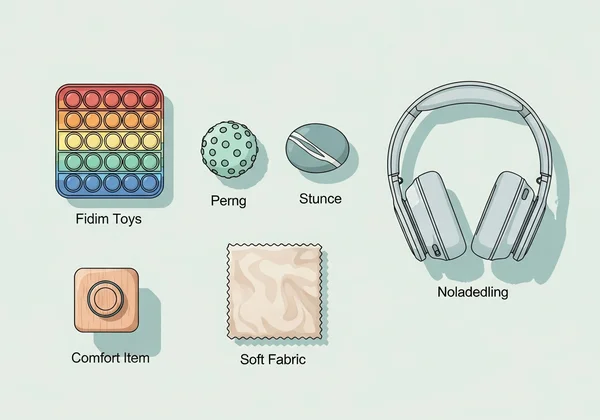
- Build a "Stim Kit": Keep a collection of fidget tools, textured objects, or other items that provide satisfying sensory input.
- Use Technology: Noise-canceling headphones can reduce sensory overload, while apps that play white noise or repetitive sounds can be soothing.
- Schedule Movement Breaks: If you have a desk job, set reminders to get up, stretch, or pace for a few minutes.
- Choose Comfort: Wear clothes with comfortable textures and remove irritating tags.
When to Seek Professional Support for Stimming Concerns
This article and the AQ test are for informational and self-exploration purposes only; they are not a substitute for a medical diagnosis. If your stimming behaviors are causing you physical harm or significant distress, it is important to speak with a doctor, therapist, or other qualified professional. They can help you identify the triggers and develop safe, alternative strategies that still meet your regulatory needs.
Embrace Your Stims: Next Steps with AQ Insights
Stimming is much more than a collection of repetitive behaviors. It is a dynamic, functional, and essential tool for self-regulation, focus, and authentic self-expression, particularly for autistic and other neurodivergent adults. Understanding and accepting your stims is a powerful act of self-compassion.
Spotting these patterns in your life? It's a personal breakthrough worth celebrating. Tools like the AQ test can provide a valuable, private, and pressure-free starting point, offering a glimpse into your unique cognitive makeup.
Ready to take the next step in your journey of self-understanding? Start your free AQ Test today and unlock personalized insights that can help you embrace every part of who you are.
Frequently Asked Questions About Stimming and the AQ Test
Is stimming always a sign of autism, or can neurotypical people stim?
Everyone stims. Neurotypical individuals might tap a pen, jiggle their foot, or bite their nails when bored or nervous. The key difference often lies in the frequency, intensity, and necessity of the behavior. For autistic individuals, stimming is typically a more conscious and essential tool for managing daily sensory and emotional demands.
Can I control or stop my stimming, and should I try to?
While it is possible to suppress or "mask" stims, it can be incredibly tiring and mentally draining. Forcing yourself to stop a harmless stim can lead to increased anxiety and emotional exhaustion. The focus should be on finding safe and comfortable ways to stim, rather than trying to eliminate the behavior altogether.
How does the AQ test help understand my sensory experiences or stims?
The AQ test measures traits related to sensory processing, attention to detail, and a preference for patterns—all of which can influence the need to stim. Your score can highlight specific areas where you might experience the world differently, providing a framework for why certain repetitive behaviors feel so necessary and calming. To learn more, you can take the test and explore the results.
What should I do if my stimming is disruptive or causes discomfort?
If a stim is causing physical harm, significant distress, or problems at work or in relationships, it's wise to seek professional support. A therapist specializing in neurodiversity can help you understand the triggers behind the behavior and work with you to find alternative stims that are safer and less disruptive but still meet your underlying sensory or emotional needs.