How Do Autistic People See the World: Understanding Perception
Have you ever wondered how do autistic people see the world—and why everyday life can feel so different for some people? For many undiagnosed adults, this question isn’t academic. It’s a personal search for language that finally fits. If you feel overwhelmed by the hum of a refrigerator, drained after a short coffee chat, or thrown off by small changes, you may be experiencing a neurodivergent style of perception. You don’t need to be certain to benefit from noticing patterns. This guide explores the unique sensory, social, and emotional landscapes of autism. We will help you identify these patterns in your own life and show you how to check your traits with this AQ-50 test online to gain more clarity.
Note: This article is for education and self-reflection. It can’t diagnose autism or replace professional care.

The Sensory Filter: Why the World Feels So Intense
To understand how do autistic people see the world differently, start with sensory filtering. Many neurotypical brains automatically turn down background input—like traffic noise, bright overhead lights, or the faint ticking of a clock—so attention can stay on one task.
For many autistic people, that “filter” can be thinner, inconsistent, or hard to control. The result can feel like “high definition” living: every sound, texture, smell, or flicker arrives at the same volume. That level of detail can support strong pattern spotting, but it also raises the risk of overload—especially in busy places like supermarkets, offices, or public transit.
Another common pattern is “bottom-up” processing. Instead of the big picture arriving first, the brain may take in parts and details first, then build the whole. That can be a strength, but it can also make noisy environments feel chaotic. When people ask how do autistic people see the world, they’re often describing this vivid, unfiltered stream of information.
The Sensory Sensitivity Checklist
Are you experiencing the world with higher intensity than those around you? Review these common signs:
- Auditory sensitivity: Background sounds like fans, buzzing, or lawnmowers feel impossible to ignore
- Visual overload: Fluorescent lighting, screen flicker, or bright sun feels harsh
- Tactile aversion: Tags, seams, or light touch feels painful or distracting
- Olfactory intensity: Perfume, cleaners, or cooking smells feel overwhelming
- Detail fixation: Small changes others miss grab your attention
If several items feel familiar, sensory load may be using a lot of your daily energy. To place these experiences in a broader context, you can compare your traits with the AQ-50 assessment and review patterns across key trait areas.

Decoding the Invisible: How Autistic Adults Navigate Social Signals
When we ask how do autistic adults see the world, social interaction is often part of the answer. For many neurotypical people, eye contact, tone, and “unwritten rules” are processed automatically. For many autistic adults, those signals can feel like a language you have to translate in real time.
This extra processing can lead to masking: copying neurotypical behaviors to reduce friction. In daily life, this may look like holding eye contact even when it’s distracting, rehearsing small talk before an event, or tracking your posture and facial expressions to avoid looking “off.” Masking can help you get through a situation. Over time, though, it can also lead to social fatigue, anxiety, and the sense that people only know a “performed” version of you.
It can help to remember that “manual processing” is not a character flaw. It’s often a sign that your brain is working harder to interpret fast, subtle signals. That effort is real, and it deserves support—not shame.
Signs of Social “Manual Processing”
- Pre-conversation scripting: You rehearse what to say (and how to say it) before you enter a room
- Post-social analysis: You replay conversations to check for mistakes
- Eye contact pressure: Eye contact feels intense or makes it harder to listen
- Literal interpretation: Sarcasm or hidden meaning clicks later
- The “alien” feeling: It seems like everyone else got a rulebook you missed
These patterns don’t mean you’re “bad at people.” They often reflect a different processing style—another way of understanding how do autistic people see the world in social settings.

Beneath the Surface: Viewing the World Through an Emotional Lens
A common myth is that autistic people lack empathy. In reality, many autistic people describe deep emotional awareness—sometimes so strong it becomes overwhelming. Some experience “hyper-empathy,” where others’ pain or joy feels intense, or where sadness in a room is hard to shake. When that intensity spikes, a person may shut down or go quiet—not because they don’t care, but because they’re trying to prevent an emotional flood.
Another related trait is alexithymia: difficulty identifying or naming one’s own emotions. You might notice a tight chest, nausea, or restlessness, but you may not immediately know whether it’s anxiety, excitement, hunger, or stress. Emotions can show up first as body signals rather than clear labels.
It can also be confusing when your outward expression doesn’t match your inner experience. You may feel a lot, yet struggle to show it “on cue.” That gap can lead to misunderstandings with partners, friends, or coworkers. Learning a few shared terms—like overwhelm, shutdown, or delayed processing—can make those conversations gentler and more accurate.
Key Emotional Patterns in Autism
-
Justice sensitivity: A strong reaction to unfairness or broken rules
-
Emotional contagion: Absorbing a room’s mood quickly
- Delayed processing: Feelings become clear hours or days later
-
Deep focus (flow): Calm and joy when immersed in a special interest
When we consider how do autistic people see the world, emotional intensity is part of the picture. For some, feelings are as vivid as sound and light—powerful, real, and sometimes hard to regulate.
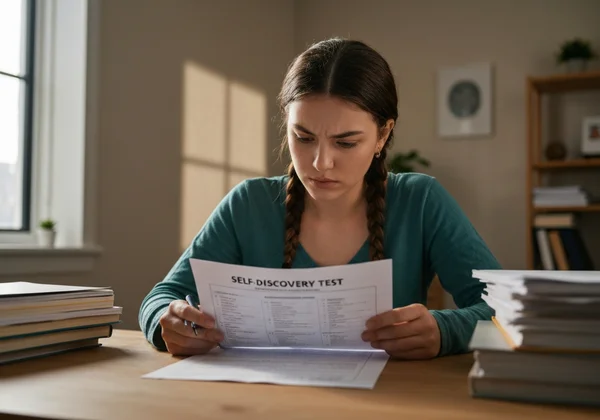
Mapping Your Own Perspective: A Path to Self-Discovery
If you’ve spent years feeling “out of sync,” naming your traits can be a form of self-care. Understanding how do autistic people see the world can help shift self-criticism into self-compassion. You’re not “broken.” You may simply process input, social signals, and emotions differently.
Self-reflection is a strong starting point. Only a qualified professional can provide a formal diagnosis, but many adults find value in structured screening tools because they help organize memories, patterns, and questions. A tool can’t tell you who you are. It can help you describe what you experience and decide what support you want next.
It’s also okay if self-discovery brings mixed feelings. Relief is common, but so is grief for past struggles that went unnamed. If you notice burnout, it may help to look at patterns like sensory load, recovery time after social events, and how much masking you do at work or school. Even small adjustments—like planning downtime after “high-demand” days—can make the week feel more livable.
As an educational resource, we offer the AQ-50 assessment for adults. It explores five areas: social skills, communication, imagination, attention to detail, and attention switching. If you choose to use it, treat the results as a map—not a verdict—and consider discussing them with a clinician if you want a fuller evaluation.
The Power of a Different Lens: Reclaiming Your Unique Worldview
Autism is often discussed through challenges, but a different lens can also bring real strengths. When we stop trying to “fix” autistic perception and start supporting it, we make space for abilities that matter in work, relationships, and creativity. When we ask how do autistic people see the world, we’re also asking what a neurodivergent mind can contribute.
Cognitive Strengths of the Autistic Mind
- Detail focus: Spotting small errors, patterns, or inconsistencies others miss
- Integrity: Valuing honesty and directness over social performance
- Specialized expertise: Deep mastery through sustained interest
- Creative problem solving: Finding solutions outside typical assumptions
These strengths don’t erase real difficulties, and they shouldn’t be used to pressure anyone into “being inspirational.” Still, it can be empowering to recognize what works well for you—especially if you’ve been judged only by how easily you fit into neurotypical expectations.
Reclaiming your worldview can mean choosing sensory-friendly spaces, setting social boundaries to prevent burnout, and leaning into your interests without shame. It can also mean asking for support in practical ways, like clearer instructions, more predictable schedules, or quieter work time.
Embracing Your Unique Way of Being
Whether you seek a professional diagnosis or simply want clearer self-understanding, learning how do autistic people see the world can open a calmer, more authentic life. You deserve support that respects your sensory limits and values your strengths.
If you want a structured way to reflect, you can try the AQ-50 test online and use your results as a starting point for your next steps.
If any of these are true, consider reaching out for professional support sooner rather than later:
- Sensory overload or shutdowns are frequent and disruptive
- Anxiety, depression, or burnout is getting worse
- Work, school, or relationships are suffering
- You feel unsafe, hopeless, or unable to cope
Frequently Asked Questions
Is autism a different way of seeing or a different way of thinking?
It is both. Differences in sensory filtering can change what information feels “loud” or “important,” and that shapes how the brain builds meaning. When we discuss how do autistic people see the world, we are often describing how perception and thinking interact.
Why do I feel emotions so intensely but can't name them?
This can relate to alexithymia, which often co-occurs with autism. You may feel emotions strongly, but the step of labeling them can take longer. Physical cues may show up first, and the “name” comes later.
Can an adult realize they are autistic later in life?
Yes. Many adults—especially high-masking individuals—are overlooked in childhood. Learning about how do autistic people see the world can bring relief by explaining long-term patterns.
What are the benefits of seeing the world through an autistic lens?
Many autistic people report strengths like pattern recognition, deep focus, accuracy in technical or creative tasks, and original problem-solving that isn’t shaped by social conformity.
Is the AQ-50 a formal medical diagnosis?
No. The AQ-50 is a screening tool for education and self-reflection. It can help you decide whether you want a formal clinical evaluation from a licensed professional.