Self Diagnosis Autism: A Careful Guide for Adults
Self diagnosis autism searches often begin with a private question: "Does this finally explain my life?" For many adults, that question follows years of feeling out of step in social situations, overwhelmed by sensory input, exhausted by masking, or intensely focused on patterns other people barely notice. Self-identification can be a meaningful first step, especially when formal assessment feels costly, inaccessible, or intimidating. It is also not the same as a clinical autism diagnosis. This guide explains how to explore autistic traits with care, how to think about online information, and when a professional evaluation may matter. If you want a calm starting point for reflection, AQ-based self-reflection tools can help you organize observations before deciding what comes next.

What Self Diagnosis Autism Usually Means
In everyday language, self diagnosis autism usually means a person believes they may be autistic based on their life history, traits, screening scores, community learning, and comparison with credible autism information. Some people prefer the term "self-identification" because it describes an identity and understanding process rather than a medical conclusion.
That distinction matters. A formal autism diagnosis is made through a structured clinical assessment that looks at developmental history, current traits, functional impact, co-occurring conditions, and alternative explanations. Self-identification is more personal. It can help someone name long-standing experiences, reduce shame, find community, and choose practical supports. It cannot, by itself, rule out ADHD, anxiety, trauma, obsessive-compulsive patterns, sleep problems, sensory processing differences from another source, or other factors that may overlap with autistic traits.
A balanced view is usually the most helpful one: self-reflection is valid as a starting point, and formal evaluation may still be important when you need accommodations, clinical documentation, or a clearer understanding of complex mental health concerns.
Why Adults Self-Identify as Autistic
Many adults begin exploring autism because childhood screening missed them. Autism has often been recognized more readily in young boys with visible support needs, while adults, women, nonbinary people, people of color, and people who learned to mask may have been overlooked. Someone who did well academically, copied social rules, or internalized distress may not have fit older stereotypes.
Cost and access are major reasons too. Adult autism assessment can involve long waitlists, limited local specialists, insurance barriers, or clinicians who are less familiar with adult presentations. For some people, a formal evaluation is simply not available in the near term. Online communities, books, podcasts, research summaries, and screening tools can become the only accessible route to language and belonging.
What Online Autism Tests Can and Cannot Tell You
Online autism tests and quizzes vary widely. Some are informal entertainment. Others are based on established screening questionnaires that can help people notice traits worth discussing with a professional. A score can support reflection, but it should not be treated as a final answer.
A good screening mindset sounds like this: "This result gives me information to consider." A risky screening mindset sounds like this: "This result settles the question forever." Even a well-designed screener depends on self-report. Your answers may be shaped by masking, memory, anxiety, depression, burnout, literal interpretation of questions, or uncertainty about what other people experience.
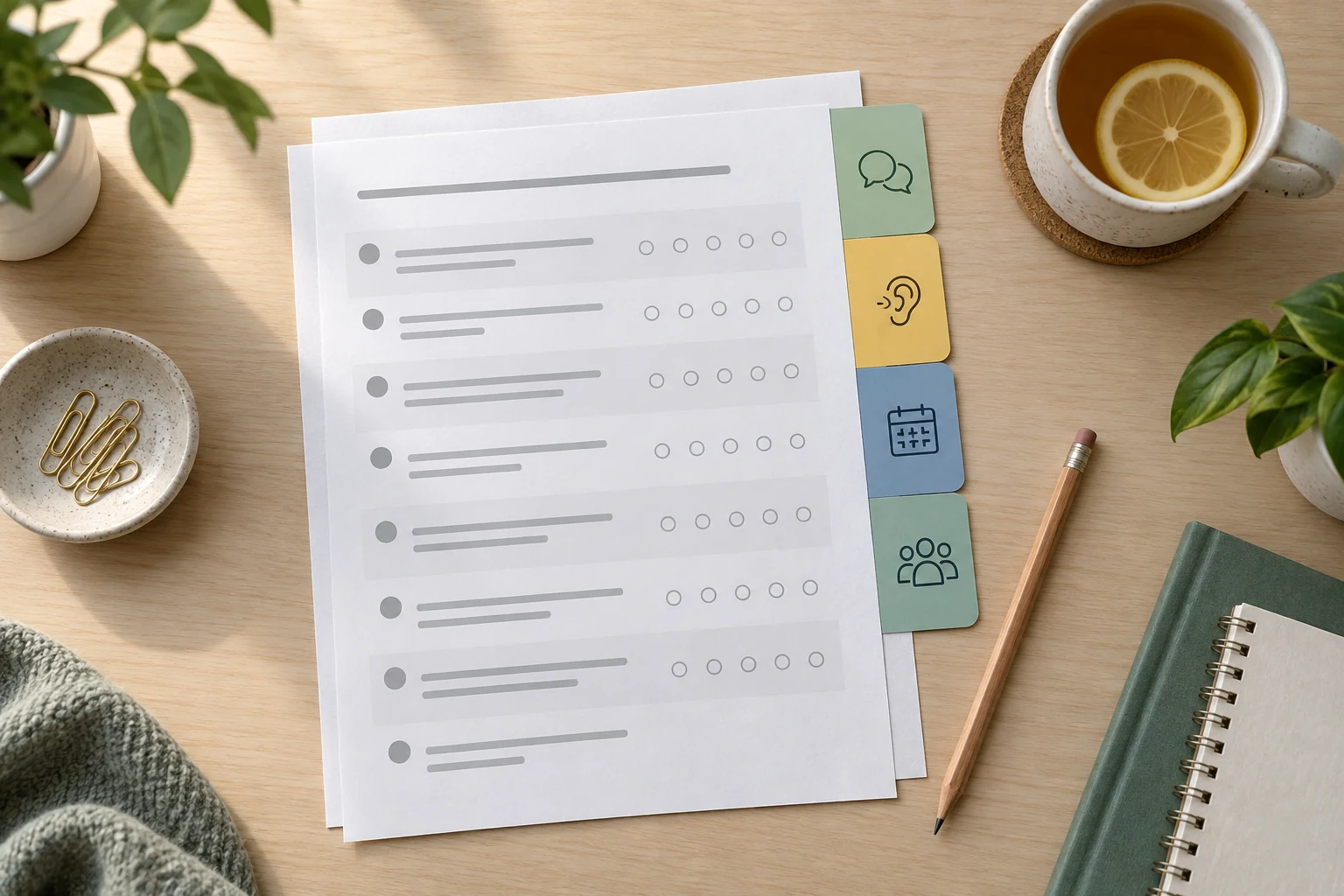
This is where an AQ-style tool can be useful when it is framed properly. A structured questionnaire can help you map traits across communication, social interaction, attention to detail, imagination, and tolerance for change. Used carefully, a structured autism traits screener can turn vague worry into clearer notes. It still remains an educational screening tool, not a clinical decision.
Autism Self-Diagnosis Accuracy: What Makes It Complicated
Searchers often ask about autism self-diagnosis accuracy, but accuracy is not a simple yes-or-no question. Some self-identified adults do careful research over months or years, compare childhood and adult patterns, speak with autistic peers, and use multiple screeners. Others may identify with short social media clips that simplify autism into a few relatable habits. Those two situations are very different.
Accuracy is also complicated because autism is a spectrum. Traits can be subtle, masked, or shaped by environment. Co-occurring ADHD, anxiety, depression, trauma, sensory differences, learning differences, or chronic stress can make the picture harder to interpret. The question is not only "Do these traits match autism?" It is also "What else could explain this pattern, and what support would actually help?"
If you are self-assessing, look for patterns that are persistent, cross multiple settings, and trace back to earlier development, even if they became more visible in adulthood. Also notice impact. Autism traits are not just preferences. They often affect communication, relationships, work, school, sensory comfort, routines, recovery time, or daily functioning in meaningful ways.
A Careful Self-Reflection Process for Adults
You do not need to rush into a fixed label. A more grounded process can help you learn while staying open.
- Write a trait timeline. Note childhood memories, school experiences, friendships, sensory reactions, intense interests, routine needs, and moments when you felt you were copying social rules.
- Track current patterns for two to four weeks. Pay attention to sensory overload, shutdowns, social recovery time, task switching, direct communication needs, and situations where masking drains you.
- Compare several credible sources. Prioritize public health, university, clinical, and autistic-led educational resources over memes or short videos.
- Use screening tools as prompts, not proof. Save your scores and write examples beside each area.
- Ask what support would help now. Noise reduction, clearer routines, written instructions, flexible communication, sensory breaks, and recovery time can help whether or not you pursue formal assessment.
- Consider professional evaluation when documentation, accommodations, complex distress, medication questions, or overlapping conditions are part of the picture.
This process gives you something more useful than a single quiz result: a practical record of lived patterns.

When Formal Autism Assessment May Be Worth Pursuing
Formal assessment may be useful if you need workplace, school, disability, insurance, or service documentation. It may also help if your situation is emotionally confusing: for example, you relate to autism content but also have trauma symptoms, panic, attention difficulties, depression, obsessive thoughts, sleep disruption, or major burnout.
Adult evaluations vary by country and clinician, but they often include interviews, questionnaires, developmental history, observation, and discussion of daily functioning. A clinician may ask about early childhood because autism is neurodevelopmental, even when a person first recognizes traits later in life. When family history is unavailable, many adults bring school records, old reports, personal timelines, partner observations, or examples from work and relationships.
The goal is not to invalidate self-knowledge. Ideally, assessment should add context. It can clarify whether autism is the best explanation, whether another condition is also present, and what supports fit your actual life. If assessment is out of reach, you can still use self-knowledge to adjust routines, reduce sensory strain, communicate needs, and seek supportive therapy or coaching for specific challenges.
Reddit, Memes, and Starter Packs: Useful Clues or Noise?
Search terms like self-diagnosis autism Reddit, self diagnosed autism meme, and self diagnosed autism starter pack show how much this topic lives in online culture. Community posts can be helpful. They can give language to experiences that clinical pamphlets miss, especially masking, social exhaustion, sensory overwhelm, and the grief of realizing you may have been misunderstood for years.
But online culture also compresses nuance. A meme can make someone feel seen, but it cannot capture developmental history. A Reddit thread can offer practical lived experience, but it may also reflect one person's context, country, access barriers, or bias. Short posts often reward certainty because certainty is easier to share than ambiguity.
Use community content as a mirror, not a verdict. If a story resonates, write down why. Does it describe a lifelong pattern? A current stress response? A sensory need? A social preference? A trauma reminder? Turning resonance into specific observations keeps the process grounded.
What Counts as Late-Recognized Autism?
Late-recognized autism generally refers to people who first understand or receive an autism diagnosis in adolescence or adulthood. Some adults always knew they were different but had no name for it. Others functioned well until life demands changed: college, work, parenting, relationships, illness, or burnout reduced their ability to mask.
Late recognition does not mean the traits suddenly appeared. It often means the environment changed, support decreased, coping strategies stopped working, or the person finally encountered better information. This is why adult self-reflection should include both past and present. A current checklist matters, but a lifelong pattern matters too.
A Balanced Next Step for Self Diagnosis Autism
If self diagnosis autism feels like the first explanation that has ever made sense, take that seriously without turning it into a pressure test. You can respect your insight and still leave room for learning. Begin with notes, patterns, sensory needs, communication preferences, and support experiments. If possible, bring that record to a qualified professional who understands adult autism and masking.
If professional assessment is not available, you can still make your life more workable. Try clearer routines, sensory accommodations, direct communication, decompression time after social events, and self-compassion around limits. A supportive self-exploration space can be one gentle step in organizing what you notice, especially when you treat results as conversation starters rather than final answers.
Most importantly, do not use self-identification as a reason to ignore distress. If anxiety, depression, trauma, sleep problems, eating concerns, self-harm thoughts, or overwhelming burnout are present, support is worth seeking regardless of what label fits best. The point of exploring autism is not to win an argument with yourself. It is to understand your needs more clearly and build a life with less unnecessary friction.

FAQ
Is autism self-identification acceptable?
It can be acceptable to self-identify as autistic as part of a careful personal exploration, especially when formal assessment is inaccessible. It is best to stay clear about the limits: self-identification can guide reflection and support needs, while a formal autism diagnosis requires professional evaluation.
How do I explore whether I'm autistic?
A safer way to phrase the goal is "How do I explore whether I may be autistic?" Start by documenting lifelong traits, current sensory and social patterns, masking, routines, and support needs. Use screening tools as prompts, compare credible sources, and consider professional assessment if you need documentation or have complex distress.
What is the biggest red flag for autism?
There is no single red flag that applies to everyone. Autism is usually recognized through a pattern of social communication differences, restricted or repetitive behaviors, sensory differences, strong need for predictability, and traits that affect daily life across time and settings.
What counts as late diagnosed autism?
Late diagnosed autism usually means autism recognized in adolescence or adulthood rather than early childhood. Many late-recognized adults had traits earlier in life but were missed because they masked, fit narrow stereotypes poorly, or did not encounter the right information until later.
Can an online autism test replace professional assessment?
No. An online autism test can help you reflect on traits and prepare examples, but it cannot replace a structured evaluation by a qualified professional. Treat results as useful information, not as a final clinical answer.
What should I bring to an adult autism assessment?
Helpful materials may include a trait timeline, examples from childhood and adulthood, school records if available, screening scores, notes from partners or family members, and a list of daily challenges or accommodations that already help you.
What if I cannot access a formal assessment?
You can still support yourself. Track patterns, reduce sensory strain, build predictable routines, communicate needs clearly, and seek help for specific concerns such as anxiety, burnout, sleep, or trauma. Lack of formal documentation does not mean your needs are unreal.