Understanding the Autism Scale: How Scientific Frameworks Measure Autistic Traits
Navigating a world that often feels calibrated to a different frequency can prompt deep personal reflection. If you have ever felt that your social energy, conversational rhythms, or sensory experiences vary from those around you, exploring a verified autism scale can offer a foundational entry point for clarity. Rather than acting as a rigid, clinical label that confines an individual, a modern autism spectrum scale is engineered to provide a supportive, science-backed framework for self-discovery. By understanding how these dimensions are measured, adults can acquire a clearer vocabulary to describe their daily reality and foster authentic self-acceptance.
What Is an Autism Scale? Shifting from Rigid Labels to Comprehensive Support Needs
To accurately understand how neurodivergent trait variations are mapped, it is essential to first understand the purpose of a standardized scale for autism spectrum dynamics. Historically, public perception often viewed autism through an outdated, simplistic lens. Modern psychology has moved past these limitations, transforming how traits are identified and supported.
Dismantling the Linear "Mild to Severe" Misconception
A common misunderstanding is that autism exists on a single, straight line stretching from mild to severe. This linear perspective implies that every individual can be neatly placed at a specific point on a continuum. In clinical reality, this is not how the autism spectrum scale operates. Two individuals might share the exact same overall classification on a baseline rating scale for autism, yet experience entirely different everyday realities. One might navigate social communication with ease but face severe sensory processing challenges, while the other might experience the exact inverse.
Embracing the Spiky Profile: The Multidimensional Reality of Traits
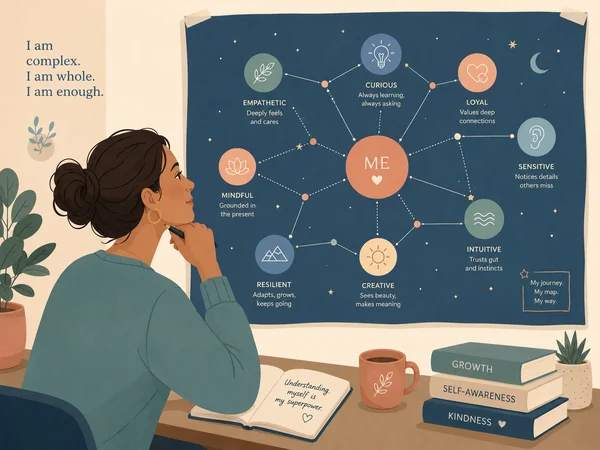
Instead of a straight line, modern specialists visualize autistic traits as a circular multi-dimensional chart, often referred to in the neurodivergent community as a spiky profile. An autism scale evaluates multiple, distinct cognitive and behavioral areas simultaneously. These areas typically include:
- Social Communication: How an individual processes conversational cues, non-verbal expressions, and group dynamics.
- Sensory Processing: The intensity with which a person perceives environmental stimuli, such as fluorescent lighting, background noise, or specific textures.
- Information Processing: A preference for deep, hyper-focused interests, systematic thinking, and structural consistency.
- Routine and Adaptability: The cognitive energy required to navigate unexpected changes or transitions in daily schedules.
When an individual's profile shows significant peaks and valleys across these dimensions, it highlights that their unique cognitive landscape requires personalized understanding rather than a generalized label.

Decoding the Three Support Levels on the Autism Spectrum Scale
The current diagnostic standard outlined in the Diagnostic and Statistical Manual of Mental Disorders (DSM-5) organizes autistic characteristics into three distinct levels. It is vital to note that these classifications measure required environmental support needs, not an individual's inherent intelligence, capabilities, or personal worth.
Level 1 ASD: Understanding Traits Associated with Lower Support Needs
Often described historically or colloquially as high-functioning autism, Level 1代表 individuals who require support but navigate daily life with a high degree of independence. In adult populations, Level 1 traits are frequently masked or hidden. An adult with Level 1 characteristics may successfully maintain employment and participate in social circles, but they often experience significant internal exhaustion or cognitive fatigue from constantly adapting to neurotypical expectations. Their challenges are real, though frequently invisible to casual observers.
Levels 2 and 3: Recognizing Varying Frameworks of Environmental Support
Individuals classified under Level 2 require substantial support, while those at Level 3 require very substantial support. For these levels, the differences across the autism spectrum scale impact daily functional routines more visible to external environments. Level 2 characteristics may involve highly specific communication patterns or intense distress when a familiar routine is altered. Level 3 characteristics often include non-verbal communication styles or a profound need for structured, consistent assistance with everyday physical and social activities.
From Historical Inventories to Modern Screening: Common Rating Scales for Autism
Over the past several decades, experts have designed various research instruments to evaluate where an individual's behavioral patterns align within the broader neurodivergent spectrum.
The Diagnostic Shift: What Is Asperger’s Syndrome Called Now?
Many adults seeking answers today grew up during an era when Asperger’s Syndrome was recognized as a distinct diagnostic category. Under current modern frameworks, this separate terminology has been retired. Individuals who previously met the criteria for Asperger’s Syndrome are now recognized as an integral part of the autism spectrum, typically aligning with Level 1 support profiles. This shift emphasizes that all variations of these traits belong to a unified, highly diverse spectrum.
Is There a Single "Most Accurate" Autism Scale for Adults?
In professional settings, clinical psychologists utilize complex multi-tiered batteries—such as the Autism Diagnostic Observation Schedule (ADOS-2) or the Childhood Autism Rating Scale (CARS-2) for developmental reviews—to build an official profile. Because these tools require professional administration and are heavily based on external observation, they are not always perfectly optimized for adults who have spent decades learning to mask their traits. Consequently, there is no single instrument labeled as universally accurate; instead, different tools serve different stages of a person's life journey.
The Role of the Autism-Spectrum Quotient (AQ) in Modern Screening
For adults embarking on an initial, private exploration of their cognitive style, self-report screening questionnaires are highly valuable. Among these, the autism spectrum quotient, or AQ, stands as an internationally recognized, scientifically validated standard developed by Cambridge researchers. Rather than relying solely on external observers, the AQ allows individuals to report their own internal experiences regarding attention to detail, communication styles, and social interactions, making it an excellent tool for adult self-reflection.
Embracing Self-Discovery: Why an Online Screening Scale Is Your Practical Next Step
Recognizing that your mind processes information differently is a powerful moment of self-realization. Engaging with an objective, structured format can help turn vague personal questions into organized, actionable insight.
How Do Professionals Use Standardized Autism Scales in an Evaluation?
If an individual eventually chooses to seek an official clinical assessment, their journey almost always begins with a preliminary tool. Healthcare professionals regularly use initial screening results to understand the baseline pattern of an adult's traits before proceeding to comprehensive diagnostic interviews. Having a documented, standardized review of your everyday experiences can be incredibly empowering when starting these formal conversations.
Cultivating Clarity: Utilizing the AQ Framework for Private Self-Reflection
You do not need to seek a formal medical diagnosis to benefit from understanding your trait structure. For many, an online asd screening option offers a completely private, zero-pressure space to explore their cognitive architecture. To help organize your personal reflections before engaging with an objective questionnaire, review the following observational guide:
| Everyday Context | Reflective Exploration Focus |
|---|---|
| Social Environments | Do you consciously mimic other people's gestures or expressions to fit into a group? |
| Sensory Spaces | Do crowded rooms, specific textures, or background sounds feel physically overwhelming? |
| Routine Patterns | Do you experience intense internal stress when your planned schedule changes unexpectedly? |
| Deep Interests | Do you feel deeply re-energized by focusing intensely on specific topic areas for hours? |
Practical Alignment Tip: If you recognize a consistent pattern of high intensity across multiple areas in this table, exploring a standardized questionnaire can help map those observations more clearly.

If you would like to expand upon these self-observations and see where your unique profile aligns within a scientific framework, taking a confidential, validated screening tool can be an illuminating next step. Learning more about your specific traits can provide the clear vocabulary you deserve for your personal journey.
Please note: Online screening questionnaires are informational resources designed solely for personal insight and self-reflection. They are completely non-diagnostic and do not replace professional medical evaluations or clinical advice.
Where to Go From Here: Navigating Your Ongoing Journey of Self-Acceptance
Understanding how your traits relate to an autism spectrum scale is a meaningful step toward compassionate self-acceptance. Whether your screening results show a high alignment with neurodivergent traits or simply highlight a few specific sensory variations, this knowledge is a tool for personal empowerment.
Knowing your unique cognitive boundaries allows you to make practical, supportive changes in your daily life. This might mean designing a more accommodating sensory environment at home, introducing structured breaks into your work schedules to prevent social fatigue, or sharing your communication preferences with loved ones. If your self-discovery process brings up complex emotions or if you desire a formal medical evaluation, sharing your structured screening insights with a neurodiversity-affirming healthcare professional can be an excellent way to expand your ongoing support network.
Frequently Asked Questions
How do modern frameworks view the concept of borderline autism?
The phrase borderline autism is not an official medical diagnosis. In educational contexts, it is sometimes used casually to describe individuals whose scores sit right at the screening cutoff boundary, or adults who mask their autistic characteristics so effectively that their traits are not easily visible during routine social interactions.
Can unrecognized autistic traits or sensory challenges lead to fatigue over time?
Yes. While the underlying neurodivergent structure of the brain does not change or worsen with age, a lifetime of constantly masking traits to fit into neurotypical environments can cause severe mental and physical exhaustion, a state often recognized as autistic burnout.
What natural strategies help calm individuals experiencing sensory overload?
Managing sensory overload involves proactively reducing overwhelming environmental input. Highly effective strategies include spending time in a quiet, low-light space, using noise-canceling headphones, engaging in repetitive regulating movements, or utilizing browser-based respiratory tracking visualizers to help stabilize your physical response during moments of high stress.
What factors primarily contribute to the development of autistic traits?
Extensive scientific research consistently indicates that autism spectrum traits are primarily developmental and genetic in origin. Modern studies show that a combination of inherited genetic heritability factors and subtle prenatal neurological development patterns interact to shape an individual's unique cognitive and sensory profile from birth.